
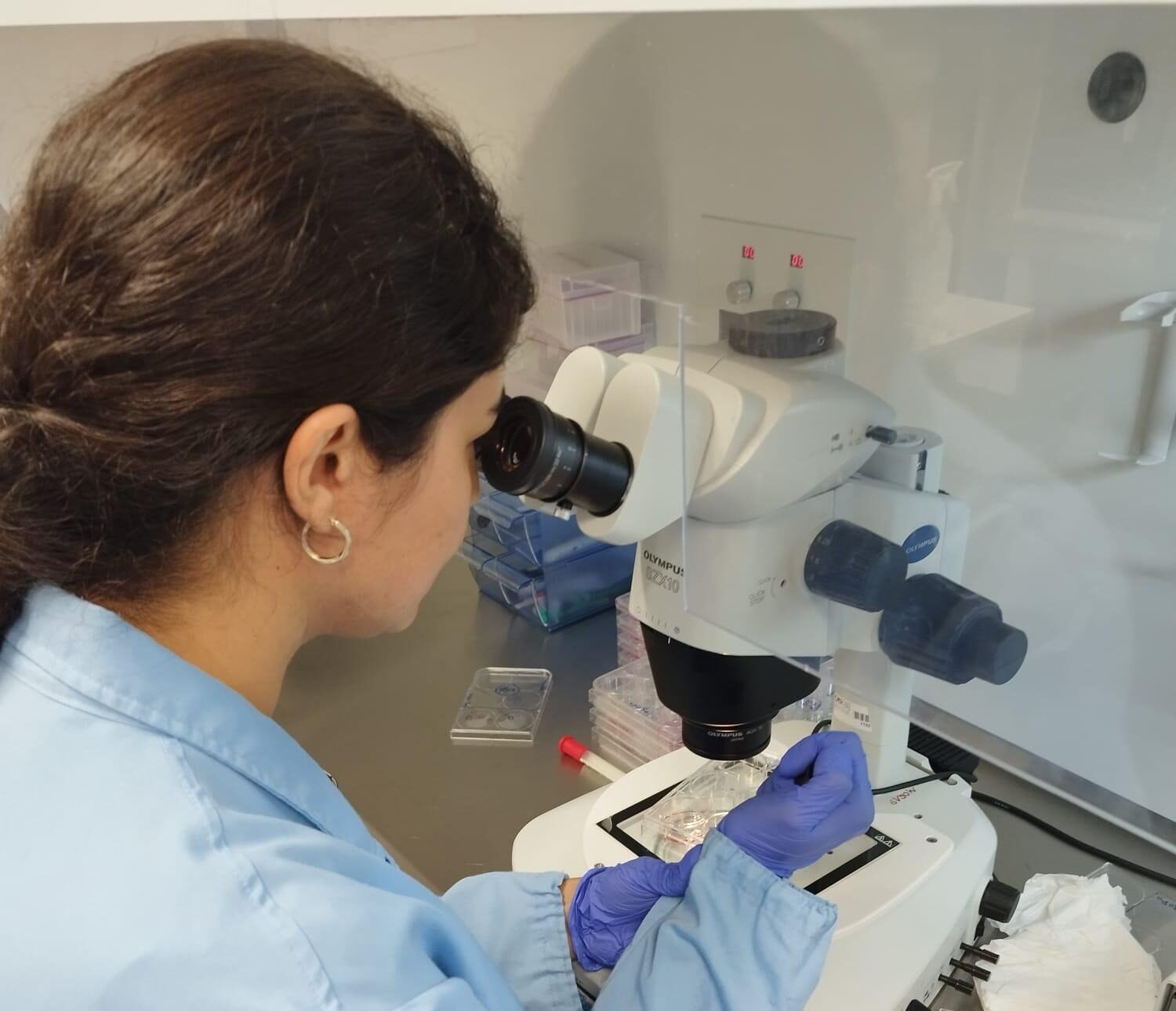
As part of the COST Action CA21151 – HAPLO-iPS, Kübra Karadağ Görgülü from the University of Health Sciences, Istanbul, Türkiye, completed a Short-Term Scientific Mission (STSM) at the Barcelona Stem Cell Bank (BCL), part of the Regenerative Medicine Programme at the Bellvitge Biomedical Research Institute (IDIBELL), Barcelona, Spain. The STSM focused on gaining theoretical and hands-on expertise in patient-derived human induced pluripotent stem cell (hiPSC) generation and characterization.
During the seven-week mission, Kübra followed six independent projects at different stages of hiPSC generation and characterization. This provided a unique opportunity to gain practical insight into the overall workflow, from the reprogramming of human somatic cells and establishment and expansion of hiPSC colonies through clone selection and quality assessment to the characterization and banking of selected hiPSC lines. She also gained hands-on experience in routine hiPSC culture and handling throughout the different stages of the workflow.
The characterization of hiPSC lines included assessment of pluripotency and differentiation potential, with immunocytochemical (ICC) analysis of pluripotency markers in undifferentiated colonies and differentiation markers following embryoid body (EB) formation, representing the three germ layers. She also received training in ICC procedures in the Histology Department and confocal imaging of hiPSC colonies and EBs at the Optical Microscopy Platform.
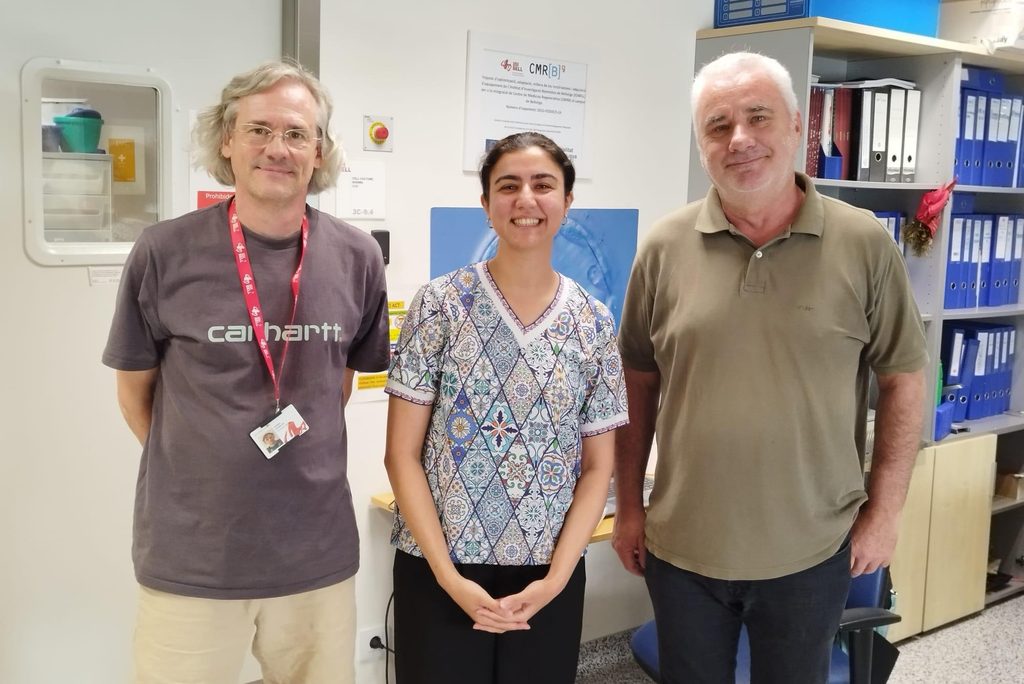
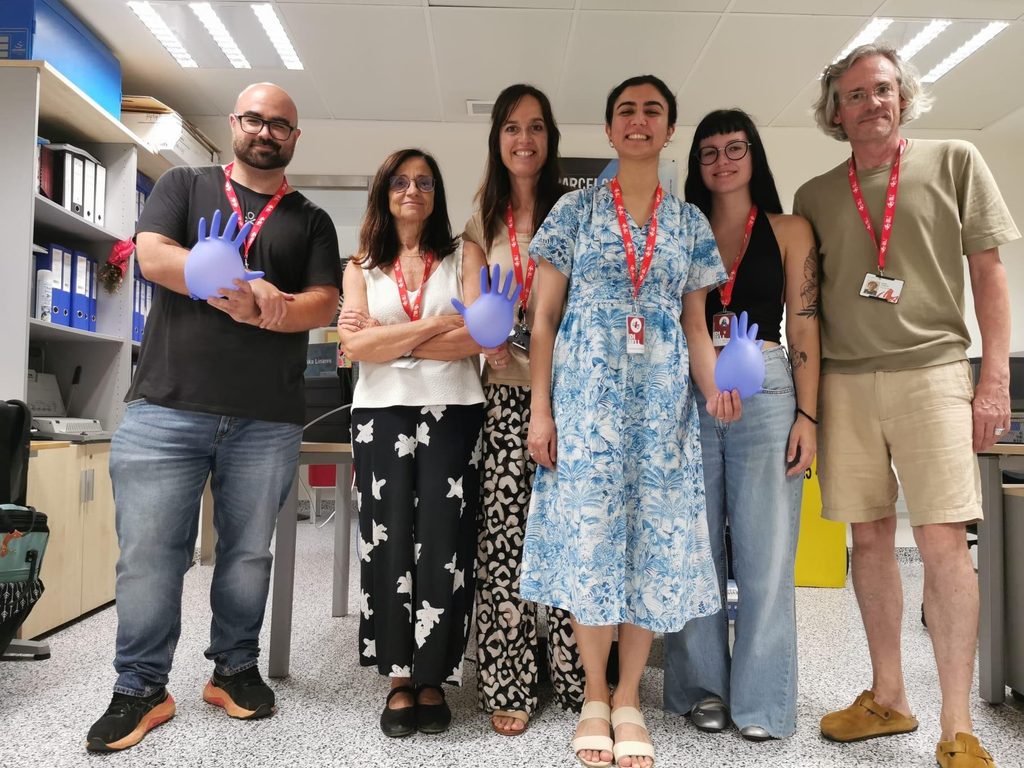
Beyond the laboratory techniques, the STSM provided valuable insight into the organization, infrastructure, quality standards, and multidisciplinary workflow of an experienced stem cell banking facility. This experience strengthened her practical understanding of hiPSC technology and will support the development of patient-derived hiPSC-based research at her home institution in Türkiye.
As an additional activity aligned with her long-term research interests, Kübra also visited research laboratories at the University of Barcelona to gain broader insight into electrophysiological approaches relevant to her future research on patient-derived hiPSC models of autism spectrum disorder (ASD), with the aim of contributing to a better understanding of ASD pathophysiology.
The STSM transformed theoretical knowledge into practical competence and strengthened her international scientific network. The knowledge and skills gained during the mission will contribute to the development of patient-derived hiPSC-based disease modelling for ASD research and support future scientific exchange within the HAPLO-iPS network. Through knowledge transfer, capacity building, and international networking, the mission contributed to the objectives of COST Action CA21151.